The wrestler said that the gem has gone away, although it were in his body. The same goes with beings. Not having come into contact with a Good Teacher of the Way, they do not know the hidden treasure of the Tathagata and do not study selflessness. For example, even when a person is said to be of unholy self, one cannot know the true quality of the Self. The same is true with my disciples. As they do not befriend a Good Teacher of the Way, they practice the non-Self and do not know where it (the Self) is. They do not know the true nature of selflessness. How, then, could they know the true nature of the Self itself? So, oh good man, the Tathagata says that all beings possess the Buddha-Nature. This is like the good doctor making the wrestler see where the adamantine jewel rests. All these beings are governed by innumerable defilements and thus do not know the whereabouts of their Buddha-nature. When the illusion is dispelled, there arises knowledge and brightness. This is like the case of the wrestler seeing the gem in the mirror. Oh good man! So is the case that what rests undisclosed [latent] in the Tathagata is immeasurable and it is difficult for beings to think about.”
2011-10-14
The Parable of the Wrestler
The wrestler said that the gem has gone away, although it were in his body. The same goes with beings. Not having come into contact with a Good Teacher of the Way, they do not know the hidden treasure of the Tathagata and do not study selflessness. For example, even when a person is said to be of unholy self, one cannot know the true quality of the Self. The same is true with my disciples. As they do not befriend a Good Teacher of the Way, they practice the non-Self and do not know where it (the Self) is. They do not know the true nature of selflessness. How, then, could they know the true nature of the Self itself? So, oh good man, the Tathagata says that all beings possess the Buddha-Nature. This is like the good doctor making the wrestler see where the adamantine jewel rests. All these beings are governed by innumerable defilements and thus do not know the whereabouts of their Buddha-nature. When the illusion is dispelled, there arises knowledge and brightness. This is like the case of the wrestler seeing the gem in the mirror. Oh good man! So is the case that what rests undisclosed [latent] in the Tathagata is immeasurable and it is difficult for beings to think about.”
2011-06-14
The Touch of Brightness
"Oh World Honored One! What do you mean when you say that 'touch of brightness' is the cause?"
"Oh good man! The Tathagata speaks about brightness at times and says that it is Wisdom, and at times (he means) 'Faith'. Oh good man! Through the causal relation of faith, a person draws near to a Good Teacher of the Way. This is touch [contact]. The causal relation of befriending leads the person to give ear to Wonderful Dharma. This is 'touch'. When someone hears the Wonderful Dharma, the body, mouth and mind of that person becomes pure. This is 'touch'. Through the purity of the three actions, one gains right living. This is 'touch'. Through right living, one gains the sila (precepts) that purifies the organic senses. On account of the precepts that purify the organic senses, one comes to seek a quiet place. In quietude, one thinks about the good. Through good thoughts, one thinks about a life in accordance with the Dharma. Through right living (in accordance with the Dharma), one gains the 37 elements of Enlightenment. Thus, a person thoroughly crushes out the innumerable evil defilements.
Read More on the Nirvana Sutra, Chapter 44 - On Bodhisattva Kasyapa 5.
touch of brightness.mp3
2011-05-17
Abstract of Nirvana Sutra Chapter 39
"The sixth person aspires to cross the great river of birth and death. Devoid of accumulated good, it sinks amid the waters. Coming close to a Good Teacher of the Way, it gains faith. Acquire faith is getting out. Due to faith, it upholds, recites, copies and speaks extensively about [Dharma] for the sake of beings. He takes pleasure in giving and practices Wisdom. Born sharp-minded, he is firmly grounded in faith and Wisdom, and his mind does not retrogress. Not retrogressing, it proceeds on and finally reaches shallow waters. Arriving at the shallow waters, it remains there and does not move. We say that it remains. This means that the Bodhisattva, in order to save all beings, abides there and meditates on defilement. He is like the sixth person on the banks of the river Ganges."
Read more on the Nirvana Sutra, Chapter 39, on Bodhisattva Lion's Roar 7.
abstract of nirvana sutra chapter 39.mp3
2011-05-09
Meditate on Defilements
“Oh good man! Someone who has Wisdom thinks: 'I must get away from these defilements and I should not do such evil and low-grade things. Why not? Because [otherwise] I cannot get rid of the karmic retributions of hell, hungry ghosts, animals, human and heavenly. By practicing the Way, through this power, I shall end up with all these sufferings’. So thinking, what the person commits is mild as regard the greed, ill-will and ignorance. Being light the greed, ill-will and ignorance, the person is happy. It still thinks: 'Now, through the power of the practice of the Way, I get away from the evil things and can now draw near of Wonderful Dharma. So I conquer the Right Way. Now I will make efforts and grow up’. Now, this person makes away with all the innumerable evil defilements, and is free of retributions of hell, hungry ghosts, animals, and those of humans and heavenly. Hence, I say in my Sutras: 'One should meditate on all the defilements and on the causes of the defilements’. Why? Should any wise person meditate on the defilements, but not on the causes of defilements, it will not be able to wipe out the defilements. Why? Because any wise person can see what will arise from the cause of the defilements. I am now severed of the cause, and the defilements do not arise.
Oh good man! This is like in the case of a doctor. Once he removes the cause, the illness will not raise its head any more. It's the same with the wise person who extirpates the cause of the defilements. Someone who is wise should first meditate on the cause and, later, on the result. It sees that good results come from a good cause, and the evil (results come) from what is evil. By meditating on the result which comes about, he does away with the cause. Having meditated on the result that will arise, it must further meditate on the lightness and the heaviness of the defilements. Having meditated on lightness and heaviness, it first does away with what is heavy. When it ended with what is heavy, what is light will go away by itself.
Oh good man! If the wise person realizes the defilements, the cause of the defilements, the result of the defilements, and the lightness and the heaviness of the defilements, that person will undertake efforts on the Way, will not cease, and not feel remorse. Such a person will associate with a Good Friend and give ear to Dharma with the sincerest mind. This is all to do away with the defilements.”
Read More on the Nirvana Sutra, Chapter 42 - On Bodhisattva Kasyapa 3.
meditate on defilements.mp3
2011-05-06
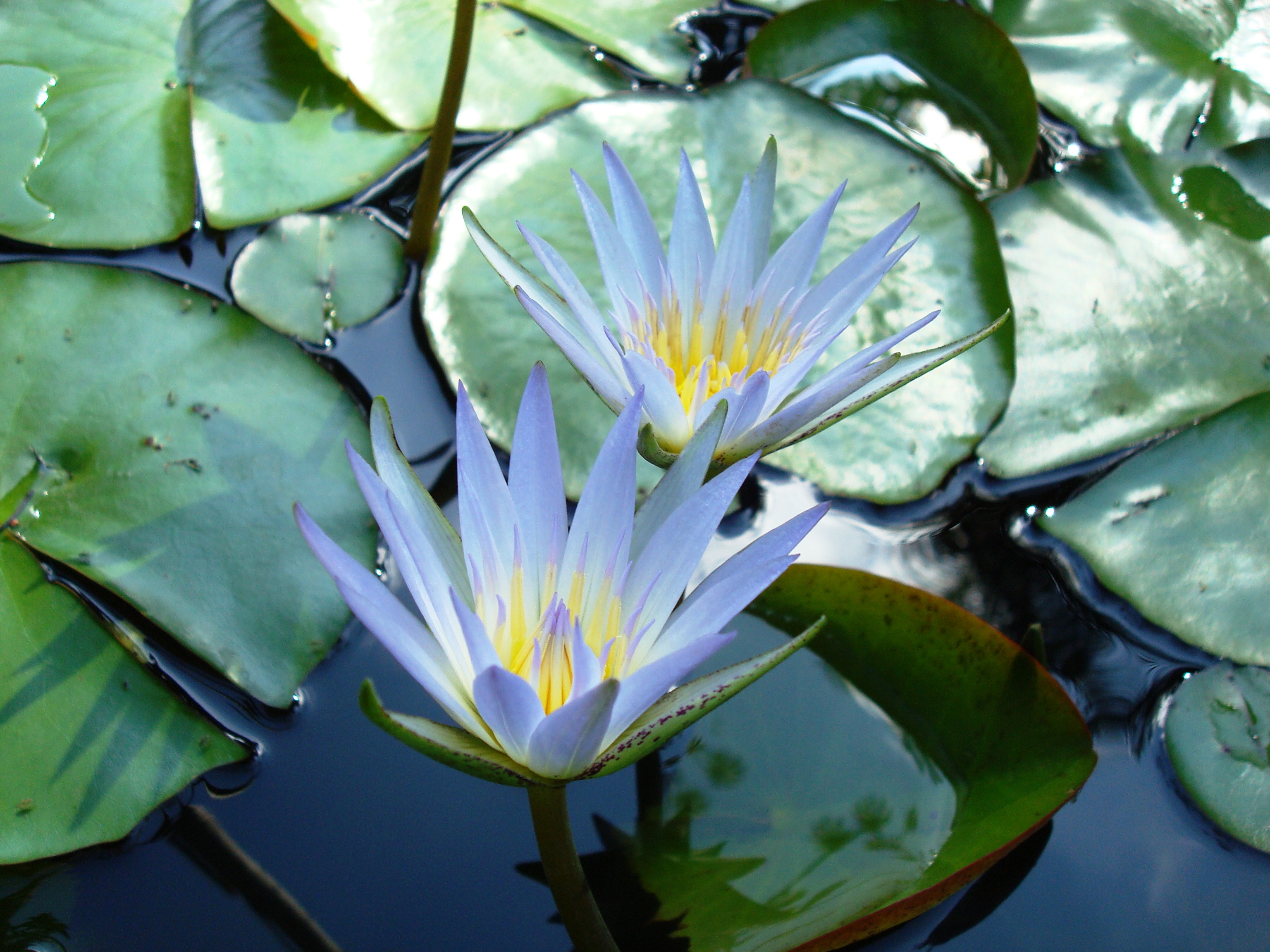
Like the Utpala – The Blue Lotus
Bodhisattva Kasyapa said: "Oh World Honored One! How many things are required of a Bodhisattva-Mahasattva to be perfect, such that he does not quarrel with the world, and does not get impregnated and defiled by what one obtains in the world?"
The Buddha said: "The Bodhisattva-Mahasattva is perfect in ten things, does not quarrel with the world and does not get impregnated and defiled by what one obtains in the world. What are the ten? They are: 1) faith, 2) upholding of the precepts, 3) befriending a good friend, 4) reflects (meditates) well within one's own self, 5) efforts, 6) right remembrance, 7) Wisdom, 8 ) right words, 9) zeal for the Wonderful Dharma, and 10) compassion for all beings. Oh good man! As the Bodhisattva-Mahasattva is perfect in these ten things, he does not quarrel with the world and does not get impregnated and defiled by what one obtains in the world, as in the case of the Utpala."
Read More on the Nirvana Sutra, Chapter 42 - On Bodhisattva Kasyapa 3.
like the utpala.mp3
2011-04-07
Fruition by Befriending
“We say ‘fruition of befriending’. For example, there is a man who befriends a good person [i.e., with a Good Teacher of Buddhism], and as a result he gains the fruits from the Srotapanna up to Arhatship. The person says: 'I now gain the fruition of befriending'. The case is thus. Such fruition has two causes, namely: 1) the near cause, and 2) the far out cause. The near (cause) is the faith; the far out (cause) is the good friend. This is the fruition from friendship.”
Read More on the Nirvana Sutra, Chapter 42 - On Bodhisattva Kasyapa 3.
fruition by befriending.mp3
2011-03-28
One Who Comes Up and Looks All Around
"Oh good man! A man rides a horse, and he both loves as whips it. It is thus. It is also the same with the mind that warms up. Due to craving, the life is obtained, and due to abandoning [the waiver], one meditates. For this reason, it is a thing of the 'is'. Although it is a created thing, it does represent the Right Way. Those who gain the warming-up are of 73 kinds, and the 10 of the world of desire. These persons are all clad in defilement. It goes from one-tenth to nine-tenths. Like in the case of the world of desire, the things range from the first dhyana up to the heaven of thoughtlessness-non-thoughtlessness. We say that there are 73 kinds. Such a person, on gaining the warming-up, never cuts off the roots of good, commits the five deadly sins, or the four grave offenses.
There are two types of these people. One associates with a good friend, and the other with a bad friend. One who associates with a bad friend comes up for awhile, but sinks again. One who associates with a Good Friend looks all around. Look all around refers to ‘topmost-height' ['murdhana' - this topmost dharma is a fruition of practice likened to the topmost height of a hill, which is both the topmost point, but it is also crucial for the falling down or retrogressing. It is a stage of practice in the Hinayana category - by Kosho Yamamoto]. The nature of this stage is yet of the class of five skandhas, and yet is related to the Four Truths. Hence, one can see all around. After the stage of 'topmost-height', the person attains that of 'cognition' [i.e. a stage of practice in which one obtains cognition of the nature of the Four Truths, and from which one no more is not retrogresses. There are several degrees at this stage - by Kosho Yamamoto]. This is the case with the stage of cognition, too. The nature is of the five skandhas, but is related to the Four Truths. This person then reaches laukikagradharma ['first-root-of-good-in-the-world'], which is of the nature of the five skandhas and has causal relations with the Four Truths. The person, gradually, gains the 'cognition of suffering’. The nature of Wisdom actualises the causal relation of the First Truth. Having thus actualised the causal relation of the Truth of Cognition, the person cuts away the defilement and attains the [level of] Srotapanna. This is the fourth stage of seeing all around in the four directions. The four directions are nothing more than the Four Truths."
Read More on the Nirvana Sutra, Chapter 42 - On Bodhisattva Kasyapa 3.
one who comes up and looks all around.mp3
2011-03-25
One Who Comes Up and Abides
“The second kind of person deeply understands that it is not perfect in action. Being not perfect, it associates with a Good Teacher of the Way. Associating himself with a Good Friend, it takes pleasure in to seek learn what it did not listen. Having heard, it takes pleasure in to act in the way taught. Having received [these instructions], it takes pleasure in to meditate. Having thought well about, it begins to live in accordance with Dharma. As it abides in Dharma, the good increases. As it increases, it does not sink any more. This is 'abiding'.
Who of the Sangha are those who match to this description? They are these five bhiksus as Shariputra, Mahamaudgalyayana, Ajnatakaundinya and the others, the group of five bhiksus of Yasas, and such others as Aniruddha, Kumarakashyapa, Mahakashyapa, Dasabalakashyapa, Bhiksuni Kisagotami, Bhiksuni Utpala, Bhiksuni Superior, Bhiksuni True-Meaning, Bhiksuni Manas, Bhiksuni Bhadra, Bhiksuni Purity, Bhiksuni Non-Retrogression, King Bimbisara, rich man Ugra, rich man Sudatta, Mahanama, poor man Sudatta, son of rich man Upali, rich man Jo, Upasika Fearless, Upasika Supratistha, Upasika Dharma-Loving, Upasika Valorous, Upasika Heaven-Gained, Upasika Sujata, Upasika Perfect-Body, Upasika Cow-Gained, Upasika Wilderness, Upasika Mahasena. All such bhiksus, bhiksunis, upasakas and upasikas can well be called "abodes" [i.e. those who abide].
Why do we say 'abide'? Because such a person always truly sees the good light. Hence, whether the Buddha has appeared in the world or not, such a person never does evil things. That's why we say 'abide'. This is like in the case in which the fish 'timi' seeks the light, does not sink and hides away. With all such beings, things proceed thus. That's why I say in the sutras:
'If a person truly discriminates the meanings,
and with an intensive mind seeks
the fruition of a Shramana,
and if a person truly reproaches all existences,
such a person is someone who lives
in accordance with Dharma.
If a person makes offerings to innumerable Buddhas
and practices the Way for innumerable kalpas,
and is blessed with worldly pleasures,
such a person is someone who abides in Dharma.
If a person befriends a Good Teacher of the Way,
hears the Wonderful Dharma,
and has a good thought in your mind,
lives in accordance with the Way,
and seeks the light and practices the Way,
that person reaches Emancipation
and lives in peace'."
Read More on the Nirvana Sutra, Chapter 41 - On Bodhisattva Kasyapa 2.
one who comes up and abides.mp3
2011-02-17
Seventh Kind of People
"The seventh person aspires to cross the great river of birth and death. But without good (deeds) amassed thus far, it sinks amid the waters. On meeting a Good Teacher of the Way, it gains faith. This gain of faith is what we call ' getting out '. Due to faith, it upholds, recites, copies and expounds the 12 types of sutras, and for the sake of beings, it speaks of them extensively. It takes pleasure in giving and practices Wisdom. Born sharp-minded, it firmly abides in faith and Wisdom, and does not retrogress in mind. As it does not retrogress, it steps forward. Stepping forward, it reaches the other shore. Having conquered the heights of a great mountain, it is now segregated from the fear and is blessed with pure peace. Oh good man! (Being on top of) the great mountain on the other shore can be likened to the Tathagata, peace to the Eternity of the Buddha, and the great and high mountain is Great Nirvana.
Oh, good man! All these people on the banks of the river Ganges have hands and feet, but they are difficult to save. It's the same with all beings, too. The Three Jewels of Buddha, Dharma and Sangha truly exist, and the Tathagata always expounds the essentials of all law [Dharma]. There are the Noble Eightfold Path and Mahaparinirvana. All beings can achieve all this. This (Nirvana) is not what comes out of me, or of those noble paths, or of beings. Know that all these things go back to defilement. Because of this, all beings cannot reach Nirvana. "
Read more on the Nirvana Sutra, Chapter 39, on Bodhisattva Lion's Roar 7.
seventh kind of people.mp3
2011-02-16
Sixth Kind of People
"The sixth person aspires to cross the great river of birth and death. Devoid of accumulated good, it sinks amid the waters. Coming close to a Good Teacher of the Way, it gains faith. Acquire faith is getting out. Due to faith, it upholds, recites, copies and speaks extensively about [Dharma] for the sake of beings. He takes pleasure in giving and practices Wisdom. Born sharp-minded, he is firmly grounded in faith and Wisdom, and his mind does not retrogress. Not retrogressing, it proceeds on and finally reaches shallow waters. Arriving at the shallow waters, it remains there and does not move. We say that it remains. This means that the Bodhisattva, in order to save all beings, abides there and meditates on defilement. He is like the sixth person on the banks of the river Ganges."
Read more on the Nirvana Sutra, Chapter 39, on Bodhisattva Lion's Roar 7.
sixth kind of people.mp3
2011-02-15
Fifth Kind of People
“The fifth person is someone who aspires to cross the great river of birth and death, but without good (deeds) amassed, sinks amid the waters. Associating with a Good Teacher of the Way, it gains faith. This is getting out. With faith, it upholds, recites, copies, expounds the 12 types of sutras, and speaks expansively for the sake of beings. He takes pleasure in giving, and practices Wisdom. Born sharp-minded, he firmly abides in faith and Wisdom, and there is no retroactivity in his mind. Not drawing back, it makes progress. Making progress refers to the Pratyekabuddha. Although good as regards to the salvation of himself, this does not extend to others. This is go away. This is like with the fifth person on the banks of the river Ganges.”
Read more on the Nirvana Sutra, Chapter 39, on Bodhisattva Lion's Roar 7.
fifth kind of people.mp3
2011-02-14
Fourth Kind of People
"The fourth person wants to cross the great river of birth and death. Devoid of good amassed, it sinks amid the waters. Coming close of a Good Teacher of the Way, it gains faith. This is getting out. As he gains faith, it upholds, recites, copies, and expounds, and for the sake of beings, it promulgates widely the Dharma. He takes pleasure in giving and practices Wisdom. Born sharp-minded, he firmly perseveres in faith and Wisdom. There is no drawing back in his determination, and he looks all around in the four directions. The four directions signify the four fruitions of a Shramana. This is like the fourth person on the banks of the river Ganges."
Read more on the Nirvana Sutra, Chapter 39, on Bodhisattva Lion's Roar 7.
fourth kind of people.mp3
2011-02-11
Third Kind of People
"The third person intends to cross the great river of birth and death. Devoid of good, it sinks amid the waters. His proximity to a Good Teacher of the Way is his getting out. The Tathagata is the All-Knower. He is eternal and immutable. For the sake of beings, he talks about the unsurpassed Way. All beings possess the Buddha Nature. The Tathagata does not go into extinction. It's the same with the Dharma and Sangha, too. There is no extinction. Not having done away with his innate quality, the icchantika cannot attain unsurpassed Enlightenment. He very needs do away with it, (his innate quality), and then he will attain it [Enlightenment]. Thus, he believes. Through faith, he practices the pure precepts. In practicing the pure precepts, he upholds, recites, copies and expounds the 12 types of sutras and speaks of them extensively for the benefit of beings. He delights in giving and practicing Wisdom. Born sharp-minded, he abides firmly in faith and Wisdom, and does not draw back in his determination. This is like the situation of the third person on the banks of the river Ganges."
Read more on the Nirvana Sutra, Chapter 39, on Bodhisattva Lion's Roar 7.
third kind of people.mp3
2011-02-10
Second Kind of People
“The second person aspires to cross the great river of birth and death, but devoid of amassed good, sinks and is unable to get out. We speak of ‘getting out - come to the fore '. This refers to the Good Teacher of the Way, through which one gains faith. By faith is meant to believe that dana [giving] evokes the fruition of dana, that any action that might be called good calls forth the fruition of good, and evil actions (calls forth) what is evil; is to believe in the suffering of birth and death, and believe in impermanence and dissolution. This is faith. Gaining faith, one practices the pure precepts, upholds, recites, copies and expounds [the sutras]. He always makes grants and practices Wisdom. If dull, the person encounters an evil friend. He is unable to learn how to practice the precepts of body and the Wisdom of mind. He gives ear to evil teachings. Or it may happen be visited by an evil period of time and be born in an evil land (country), and be uprooted from good deeds. Uprooted from goodness, it always sinks into the birth and death. His case is like that of the second person on the banks of river Ganges.”
Read more on the Nirvana Sutra, Chapter 39, on Bodhisattva Lion's Roar 7.
second kind of people.mp3
2011-02-02
Getaway from Hell
Lion's Roar said: "Oh, World Honored One! Who suffers little in the present life what would have to suffer in hell?"
“Oh, good man! Any person in the world who practices the body, sila, Wisdom, and the mind, as stated above, and who sees that all things are void and all-equal, and who sees no Wisdom, nor who is wise, nor ignorance, nor who is ignorant, nor practice and nor even those who practice, that person is someone who is wise. Such a person really practices the body, sila, mind, and Wisdom. Such a person really makes [what would have been] the karmic retribution in hell become little to be suffered in this life. This person may have committed the gravest of sins, but it thinks about [the matter], sees, makes it light, and says: 'What I did is grave in nature. But, nothing is better than good deeds. For example, 100 pounds of flowers upon flowers cannot ultimately be compared with a 'ryo' [unit of weight or money] of true gold. We might well throw a 'sho' of salt into the Ganges, but no salty taste will come about [from this] and no one who drinks its water will feel it. A rich man may possess 1,000 million jewels and yet he will not be arrested and made to suffer pain because of this. Or a great gandhahastin (musky elephant) can break an iron cage, escape and be free.’ So it is [also] with the person who has Wisdom. It always thinks to himself: 'I have much of the power of good and little of evil deeds. I confess and repent, and end up with evil. If we practice Wisdom, the power of Wisdom will grow, and the power of ignorance will lessen.’ Thinking thus, he befriends a Good Teacher of the Way and learns the right view of life. If he sees a person who upholds, recites, copies and expounds the 12 types of sutras, he will feel respect in his mind and, moreover, will make offerings to him of such things as clothing, food, accommodation, bedding, medicines, flowers and incense, and will praise and respect him. Wherever he goes, he praises only what is good and does not speak of what is lacking. He makes offerings to the Three Treasures, respects and believes that the Vaipulya Sutra of Great Nirvana and the Thatagata are Eternal and Unchanging, and that beings possess the Buddha Nature. Such a person makes what would be heavily suffered in hell, something that is [only] slight pain in this life. Oh, good man! For this reason, it is not the case that all actions are definite and that all beings definitely have to undergo karmic retribution."
Read More on the Nirvana Sutra, Chapter 38 - On Bodhisattva Lion's Roar 6.
getaway from hell.mp3