Mostrando postagens com marcador Practice. Mostrar todas as postagens

2011-05-06

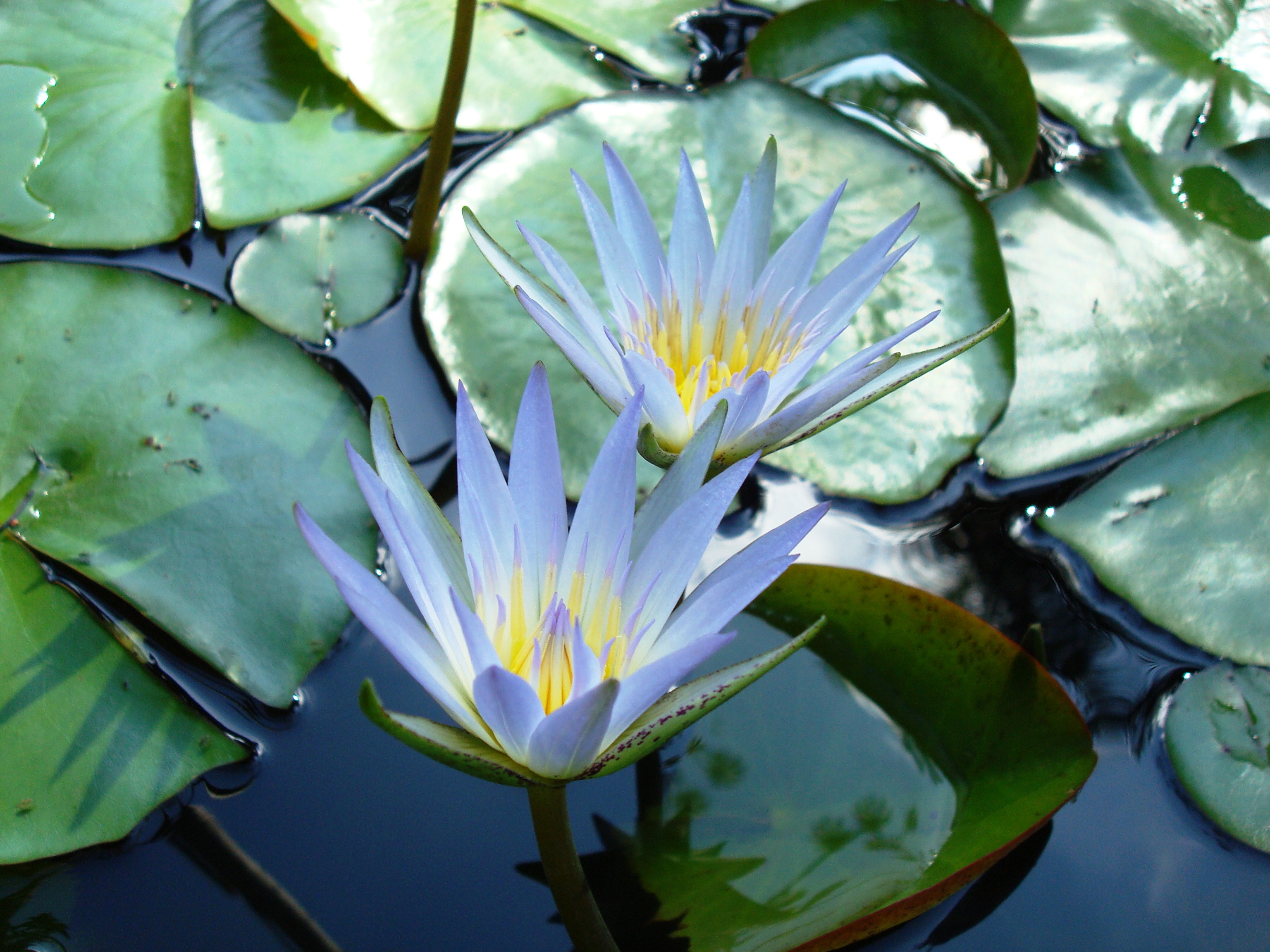
Like the Utpala – The Blue Lotus

Bodhisattva Kasyapa said: "Oh World Honored One! How many things are required of a Bodhisattva-Mahasattva to be perfect, such that he does not quarrel with the world, and does not get impregnated and defiled by what one obtains in the world?"

The Buddha said: "The Bodhisattva-Mahasattva is perfect in ten things, does not quarrel with the world and does not get impregnated and defiled by what one obtains in the world. What are the ten? They are: 1) faith, 2) upholding of the precepts, 3) befriending a good friend, 4) reflects (meditates) well within one's own self, 5) efforts, 6) right remembrance, 7) Wisdom, 8 ) right words, 9) zeal for the Wonderful Dharma, and 10) compassion for all beings. Oh good man! As the Bodhisattva-Mahasattva is perfect in these ten things, he does not quarrel with the world and does not get impregnated and defiled by what one obtains in the world, as in the case of the Utpala."

Read More on the Nirvana Sutra, Chapter 42 - On Bodhisattva Kasyapa 3.

like the utpala.mp3

2011-02-04

Abstract of Nirvana Sutra Chapter 36


“Oh, good man! The practice of Shila [precepts of morality] is for the quietness of our own body. The practice of Samadhi is for the quietness of our own mind. The practice of Wisdom is for crushing out doubt. To crush out doubt is to practice the Way. Practice the Way is to see the Buddha Nature. See the Buddha Nature is to attain unsurpassed Enlightenment. Attain unsurpassed Enlightenment is to arrive at unsurpassed Great Nirvana. Arrive at Great Nirvana is to segregate all beings from birth and death, all defilements, all [worldly] existences, all realms, all truths of beings. Cut off [these] births and deaths, and satya [presumably ‘worldly truths’] is to attain the Eternal, Bliss, the Self and the Pure."

Read more on the Nirvana Sutra, Chapter 36, on Bodhisattva Lion's Roar 4.


abstract of nirvana sutra chapter 36.mp3

2011-02-01

The Practice of Wisdom


"We speak about the non-practice of Wisdom. Wisdom has great power, like that of a Garuda [a mythical bird]. It truly destroys the evil deeds and the darkness, as does the light of the sun. It thoroughly uproots the tree of the skandhas, like water, on which things can float easily. The wisdom thoroughly burns out the evil views of life, like a great fire, is the fountainhead of all good dharmas, and the seed from which stems the Buddhas and Bodhisattvas. If someone does not see things thus, this is nothing more than the non-practice of Wisdom."

Read More on the Nirvana Sutra, Chapter 38 - On Bodhisattva Lion's Roar 6.


practice of wisdom.mp3

2011-01-31

The Practice of the Mind


“We say that there is the non-practicing of the mind. This is nothing more than being unable to meditate on the mind. It [the mind] carries itself lightly and noisily, and is hard to catch hold of and to destroy. It runs about unmolested like an evil-minded elephant. Its movements are quick at every moment, as swift as lightning. It's as noisy and restless as a monkey. It's like a ghost or a flame. It is the root of evil, and it is hard to satisfy the call of the five desires. This is like fire that feeds on fuel, or the great ocean which swallow the waters of all rivers, or like the grasses and plants that grow so luxuriantly in Mandara (Mount). If a person does not meditate on the falsity of birth and death, it will always be tempted, as with a fish that swallows the hook. Always a watchword is given, followed by all the acts. This is like the mother who leads all the small ones.

A person becomes greedily attached to the five desires and does not care for Nirvana. This is like the camel that eats honey, forgetting all about the fodder till death slaughter it. Anyone who does not see things thus can be called one non-practicing of the mind.”

Read More on the Nirvana Sutra, Chapter 38 - On Bodhisattva Lion's Roar 6.


practice of the mind.mp3

2011-01-27

The Practice of the Precepts


"We say that there is the non-practice of the precepts. Oh good man! This is nothing more than not being able to regard sila [precepts of morality] as a kind of ladder for all good dharmas. Sila is the root of all good dharmas. This is like the land, which is where all the trees grow. This is the best guide to everything that is good. It's like the owner of a ship that guides all the merchants. Sila is the banner of victory. It's like the hanging ensign of Devendra. Sila eternally extirpates all evil deeds and the three unfortunate realms. It thoroughly cures serious illnesses, such as a medicinal tree. Sila is nothing more than the food on the steep path of birth and death. It is the armor and sword that crush the thieves of defilements; and it is the best spell, which annihilates the poison of the vipers of defilements, or it is the bridge through which one can truly cross over the path of evil deeds. Any person who cannot think that way, is someone who does not practice the precepts. "

Read More on the Nirvana Sutra, Chapter 38 - On Bodhisattva Lion's Roar 6.


practice of the precepts.mp3

2011-01-26

The Practice of the Body


"Oh good man! For example, there can be all-wonderful gardens and forests in the world. But if any corpse is there, that place becomes impure, people abandon it, and person any no longer feels love or attachment [to that place]. It's the same with what happens in the world of matter. Though wonderful to look at, in that there is a body to represent them, all the Buddhas and Bodhisattvas abandon it.

Oh good man! If a person cannot see things in this light, we do not call this the practice of the body. "

Read More on the Nirvana Sutra, Chapter 38 - On Bodhisattva Lion's Roar 6.


practice of the body.mp3

2010-12-02

Right Time To Practice Equanimity


"Oh, good man! When the two phases of meditation and knowledge does not go together, know that this is not the right time to practice equanimity. When the two (phases) are in balance, know that this is the right time to practice equanimity. This is the sense in which we say that the Bodhisattva knows when is the time and when is not the time. Oh, good man! When the Bodhisattva experiences the rise of defilement, and if he practices meditation and Wisdom, knows that this is not the time to practice equanimity. He should actually read and recite, write and copy, expound the twelve types of sutras, think of the Buddha, Dharma and Sangha, the precepts, the heavens, and equanimity. This is where we say we practice equanimity. Oh, good man! When the Bodhisattva practices these three phases of Dharma, he gains from this the formlessness Nirvana."

Read More on the Nirvana Sutra, Chapter 38, on Bodhisattva Lion's Roar 6.


right time to practice equanimity.mp3

2010-12-01

Right Time To Practice Wisdom


“A Bodhisattva can make much effort and yet not be able to arrive at the Bliss of Nirvana. Not getting this, he feels regret; or because of a dull nature, he may not be able to subdue all his five sense organs. As all defilements and illusions have full strength, he may doubt and think that there is a weakening in the observance of moral precepts. Know that this time is not good for meditation. One should practice knowledge. This is how we say that the Bodhisattva knows well when is the time and when is not.”

Nirvana Sutra, Chapter 38, on Bodhisattva Lion's Roar 6.


right time to practice wisdom.mp3

2010-11-30

Right Time To Practice Meditation


Lion's Roar said: "Oh World Honored One! How does the Bodhisattva know when is the right time or not? "

"Oh good man! The Bodhisattva-Mahasattva can acquire great arrogance when he becomes blessed with happiness, arrogance from delivering a sermon, or arrogance from effort, or arrogance in discussing of understanding of a [particular] meaning, or arrogance from befriending an evil friend, or arrogance from giving (donations) which he estimates much, or arrogance from (have) good things and virtues of worldly nature, or arrogance from being respected by the nobility of worldly life. Such is not the right time to wisdom. He should then practice meditation well. "

Nirvana Sutra, Chapter 38, on Bodhisattva Lion's Roar 6.


right time to practice meditation.mp3

2010-11-17

Why We Practice


“Oh, good man! The practice of Shila [precepts of morality] is for the quietness of our own body. The practice of Samadhi is for the quietness of our own mind. The practice of Wisdom is for crushing out doubt. To crush out doubt is to practice the Way. Practice the Way is to see the Buddha Nature. See the Buddha Nature is to attain unsurpassed Enlightenment. Attain unsurpassed Enlightenment is to arrive at unsurpassed Great Nirvana. Arrive at Great Nirvana is to segregate all beings from birth and death, all defilements, all [worldly] existences, all realms, all truths of beings. Cut off [these] births and deaths, and satya [presumably ‘worldly truths’] is to attain the Eternal, Bliss, the Self and the Pure."

Nirvana Sutra, Chapter 36, on Bodhisattva Lion's Roar 4.


why we practice.mp3

2010-11-16

How to Practice Wisdom


"How does one practice Wisdom? Someone who practices wisdom and think: 'If I practice such Wisdom, I shall attain Emancipation and save those in the three unfortunate realms. Who is that indeed benefits all beings, crossing them to the other shore beyond birth and death? It's difficult [to be present when] the Buddha appears in the world. It is an event as rare as coming across the flowering of the Udumbara. I shall now thoroughly cut away the bonds of all defilements. I shall gain the fruition of Emancipation. On this account, I shall now learn to practice Wisdom, I shall burst the bonds of defilements, and attain Emancipation'. Any person who practices the Way thus, is not someone who practices Wisdom.

How does a person truly practice Wisdom? The wise person meditates on the sorrows of birth, old age and death. All beings are overshadowed by ignorance and do not know how to practice the unsurpassed Right Path. He prays: "I pray that my body will suffer great sorrows in lieu of all beings. Let all the poverty, degradation, thoughts of precept’s transgression, all the actions of greed, anger and ignorance of all beings gather over me. I pray that all beings will not acquire a mind of greed, and will not be bound up in body-and-mind. I pray that all beings will soon cross the sea of birth and death, so that I need not face them and feel sorrow. I pray for everyone to attain unsurpassed Enlightenment." When a person practices the Way thus, it sees no Wisdom, no form of Wisdom, nor any who practices Wisdom, and nor the fruition to be achieved. This is practicing Wisdom.

Oh, good man! Someone who thereby practices Shila, Samadhi and Wisdom is a Bodhisattva; one who cannot thereby practice Shila, Samadhi and Wisdom is a Sravaka."

Nirvana Sutra, Chapter 35, on Bodhisattva Lion's Roar 3.


how to practice wisdom.mp3

2010-11-12

How to Practice Samadhi


"How does one practice Samadhi? If one, when practicing samadhi, does it to enlighten himself, for profit, not for the sake of all beings, not for the practice of Dharma, but by greed, by defiled food, for sexual reasons, due to impurities of the nine holes, for disputes, for beating and killing others; any person who practices Samadhi thus, is not someone who practices Samadhi.

Oh, good man! What is the true practice of Samadhi? Someone who practices for the sake of all beings, to deploy in the minds of beings the all-equal idea, the non-retroactive Dharma, the holy mind, to enable beings to attain the Mahayana, to guard the Unsurpassed Dharma, for beings do not retrogress from Enlightenment, for them to gain the Surangama (Samadhi), the Vajra Samadhi, Dharanis [i.e., long mantras or magic spells], to enable beings to obtain the four unhinderednesses (wisdom), to enable beings to see the Buddha Nature. And when practicing thus, one sees no Samadhi, nor form of Samadhi, nor a person who practices this, nor any results to be achieved. Oh, good man! If things indeed proceed thus, we say that this person is practicing Samadhi."

Nirvana Sutra, Chapter 35, on Bodhisattva Lion's Roar 3.


how to practice samadhi.mp3

2010-11-11

How to Practice the Precepts


The Buddha said:" Oh, good man! There is a man who upholds the prohibitions and precepts, but [does so] for the happiness that he can obtain for himself, for humans and gods, and not to save all beings, and not for protect the unsurpassed Wonderful Dharma, but for profit and for fear of the three unfortunate realms, for the life, lust, power, safety, eloquence, for fear of state laws, evil reputation, for fear of dirty name, and for worldly works. Such guarding and upholding of precepts cannot be called practicing the precepts. Oh, good man! What is the true upholding of the precepts (shila)? When someone upholds precepts, the goal should be to pass the beings to the other shore, to protect the Wonderful Dharma, to save the unsaved, to enlighten the unenlightened, to enable those who have not yet taken refuge taken it, to enable those who have not yet attained Nirvana attain it. Practicing thus, a person does not see precept (shila), how it is actually upheld, the person who upholds precepts, the results to be attained, whether the person has sinned or not. Oh, good man! If anyone acts thus, this is the upholding of precepts (shila)."

Nirvana Sutra, Chapter 35, on Bodhisattva Lion's Roar 3.


how to practice the precepts.mp3

2010-11-09

The Practice of the Way


“Oh, good man! You say: 'A person dies moment after moment. How can there be any growth'? But as the mind is not cut off, there is growth. Oh, good man! A man recites. The letters read cannot occur simultaneously. Which came first cannot extend to the middle, and which was read in the middle, cannot go to the end. The man, the letters and the mental image die out moment after moment, and practicing a lot we come to knowledge.

Therefore, know that a person cannot be equal to the others. If were equal, no differences could arise. The same applies to the practice of the Way by a being. By one action, a person may not achieve the goal. But through long practice, it does away with all defilements."

Nirvana Sutra, Chapter 35, on Bodhisattva Lion's Roar 3.


the practice of the way.mp3